If you’ve spent enough time around youth football, you’ve probably heard the same debate over and over again.
Is it worth taking a team to Europe? Or are domestic showcases and tournaments just as good?
On paper, the argument for staying home often sounds sensible, as this means less travel, lower costs, and familiar opposition. Domestic tournaments are a packed calendar of showcases that promise exposure and competition. And in fairness, the standard of youth football in the United States has improved dramatically over the last decade.
But football isn’t only about convenience or the number of games one has played. It’s about context. In Europe, football or soccer as Americans call it is for some, the only sport they have it is part of everyday life, watching their local teams in action football in Europe creates culture, habits, friendships, standards and helps develop not only players but people too. While in the United States soccer is possibly the 4th or sometimes even 5th choice sport after Basketball, American Football, Baseball & Ice Hockey
This environment gives training and matches purpose, helping players understand football on a deeper level rather than simply accumulating games.
A European Youth Soccer Experience isn’t just a collection of matches. It’s an education for players, coaches, and teams on how the game is lived, taught, and understood at its highest levels.
That’s the difference.
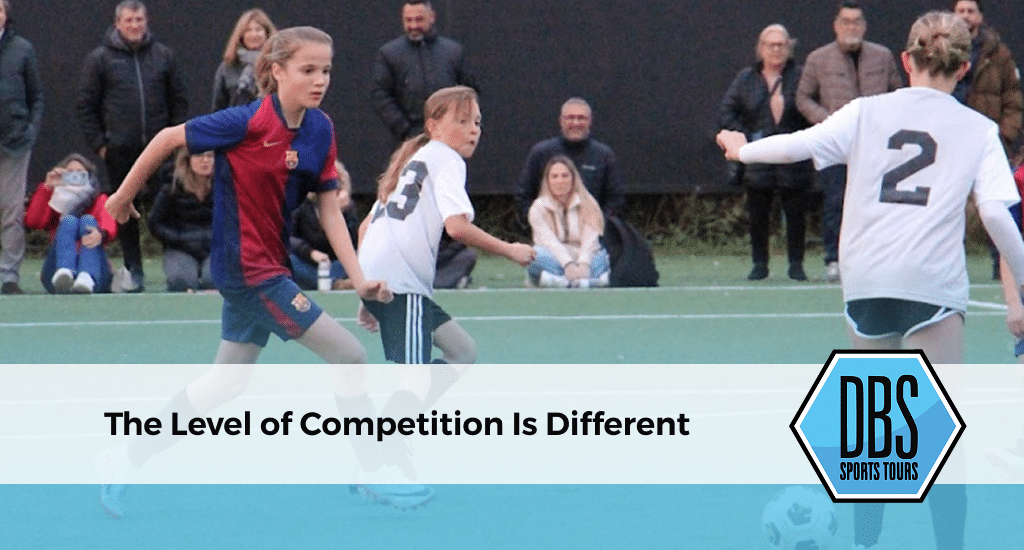
The Level of Competition Is Different
One of the biggest misconceptions soccer teams have about touring Europe is that it’s simply about playing “stronger teams.” That’s not entirely true.
Yes, the level is high. Yes, the technical standard is sharper. But the real difference is how players are challenged.
In many domestic tournaments, games are fast-paced, physical, and results-driven. Teams play to win the weekend. Coaches manage minutes to survive the schedule. Players adapt to the format. Which is also good, but players need more than that to succeed fast.
In Europe, even at the youth level, the emphasis is different. Teams are coached within a clear football identity. Players play and train differently; they understand their roles in and out of possession.
For young players, especially those between U8 and U14, this is often the first time they experience football where:
- Decision-making matters more than size or speed
- Ball retention is valued over constant transitions
- Tactical awareness is expected, not optional
It forces players to think differently. And that discomfort is where growth actually happens.
Europe Teaches the Game, Not Just the Result
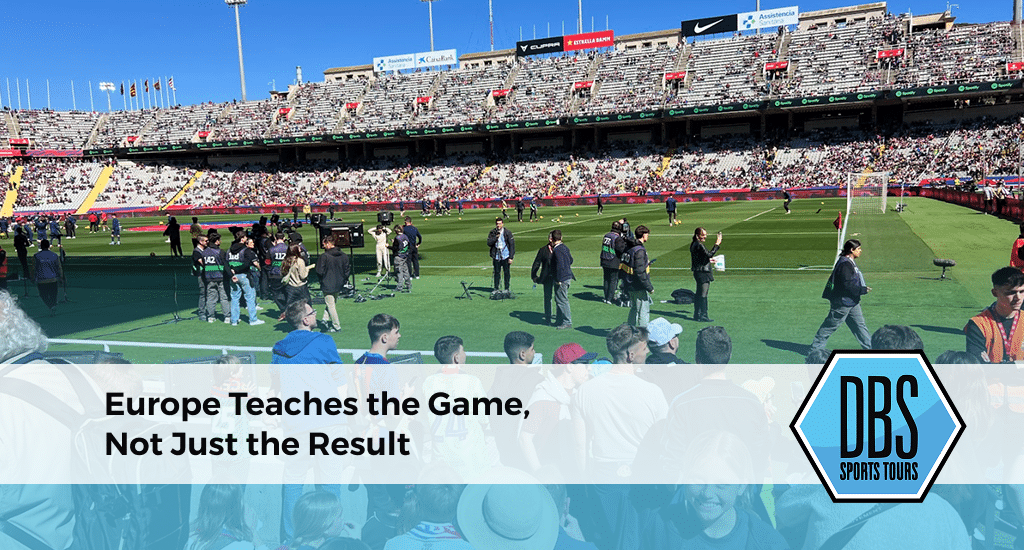
One of the most striking things coaches notice on European tours is how calmly the game is approached.
Youth matches don’t feel chaotic. During games, coaches are quiet as practice and training is done on training days, match days are about learning and encouraging players to play and express themselves.
This doesn’t mean European football is soft, far from it. It means intensity is applied with purpose.
For American players raised in an environment where urgency is constant, this shift can be eye-opening. They learn that:
- You don’t need to force every moment
- The ball can do the work
- Football intelligence travels further than athletic dominance
- Talent should be complemented with tactics and strategy
These lessons don’t always show up on the scoreboard, but they stay with players long after the tour ends.
Cultural Immersion Changes How Players See the Game
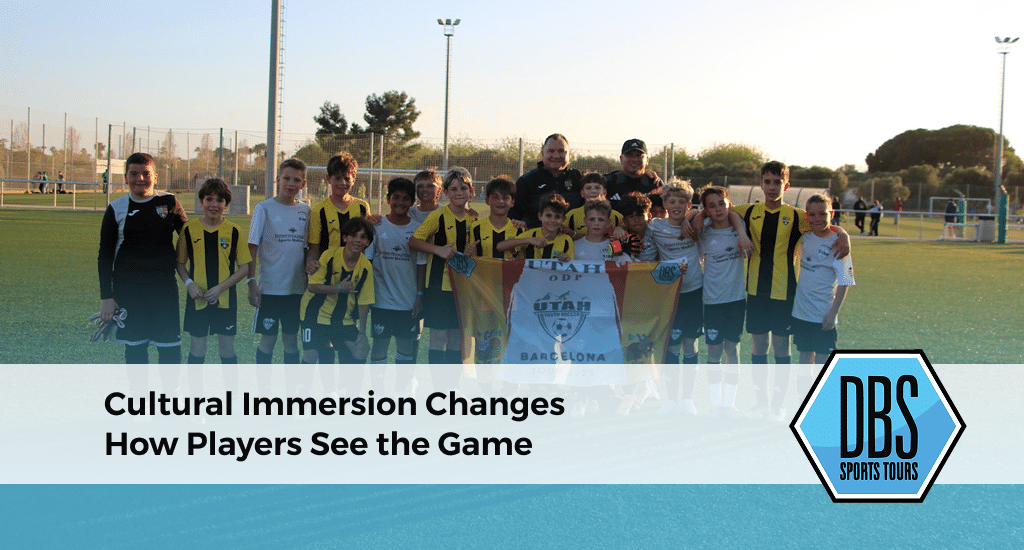
Football culture isn’t something you can replicate at home, no matter how good your facilities are.
In Europe, football is part of daily life. Training grounds sit next to residential neighborhoods. Matches are discussed in cafés. Club history is treated with genuine respect. Even young academy players understand who they represent when they play on the field.
When teams tour Europe, players experience this firsthand.
They see how professional clubs are embedded in their communities. Players walk into stadiums that have hosted decades of football history. Additionally, they train at facilities where first-team players train, not as a marketing exercise, but because that’s simply how the system is structured.
This changes how young players relate to the game. It stops being just something they do after school and starts feeling like something bigger than them.
That perspective is very crucial.
Player Development Happens Off the Pitch Too
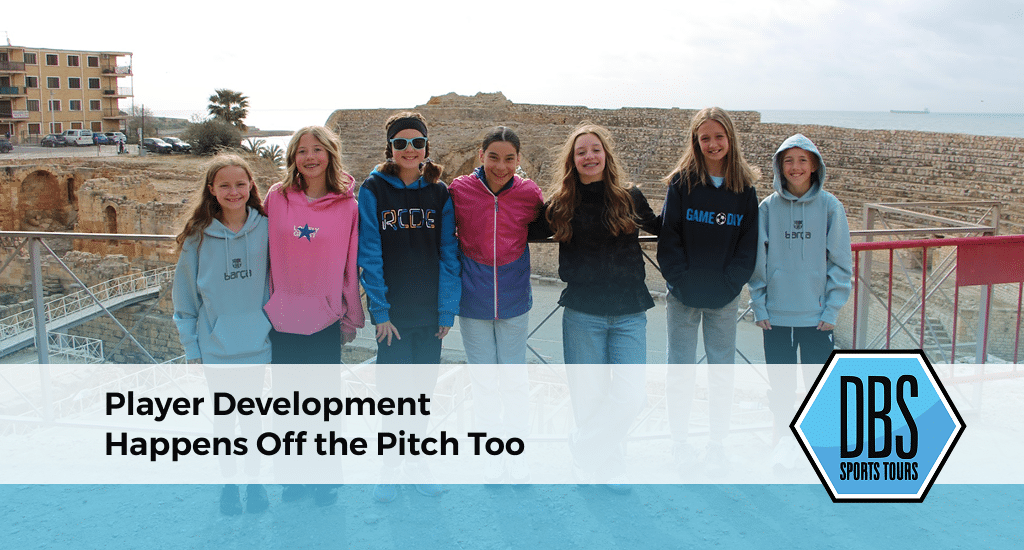
Development isn’t only about sessions and matches. It’s about the environment, and Europe is a heavily professional football environment.
Living together as a team in a new country forces players to grow up quickly. They learn responsibility. They learn how to represent themselves and their club. Likewise, they follow new routines, use different languages and eat different foods, and try to meet expectations. They also embrace confidence, emotional maturity, and independence through such experiences.
They adapt to new routines, new food, new languages, and unfamiliar expectations.
These experiences build:
- Confidence
- Independence
- Emotional maturity
For many players, especially at younger ages, this is their first time away from home in a football setting. And that matters just as much as what happens on the training pitch.
Coaches often return from European tours noticing changes that have nothing to do with technique:
- Better focus
- Stronger communication
- Improved discipline
- A deeper sense of team identity
Those are foundations that stick.
Coach Derek Dunne from Utah Celtic brought his U17 girls to Barcelona, where he adopted a new coaching and playing style that later led them to a national championship back in the USA.
Another example of why touring Europe benefits teams is that Coach Burton’s U17 Wasatch SC team from Utah played against Villarreal, Girona, Real Madrid & RCD Espanyol over 2 trips to Barcelona within 12 months of each other, and later went on to win back-to-back national championships.
Team Bonding That Can’t Be Forced
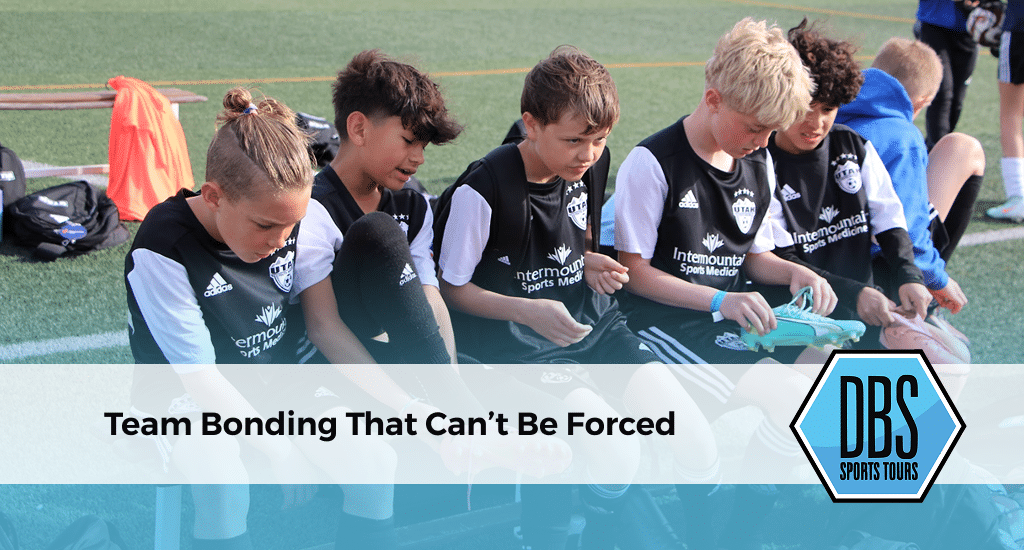
Team bonding is often discussed in theory but rarely understood.
You don’t build real bonds by sharing a locker room for two days at a domestic tournament. You build them by navigating unfamiliar situations together, long travel days, tough matches, shared meals, recovery sessions, and moments away from football.
European tours naturally create space for this.
Players spend extended time together without distractions. They experience wins and losses in a different context. They support each other through fatigue and challenge. And they create memories that will live with them forever. Being immersed within a football environment with friends family and teammates touring as a team in Europe creates a bond that isn’t established by training each week and playing it is established outside of soccer during stadium tours, watching live matches and bonding outside of the soccer activities
For many teams, the tour becomes a defining moment in their football journey.
Why Europe Soccer Tours Beat Domestic Tournaments?
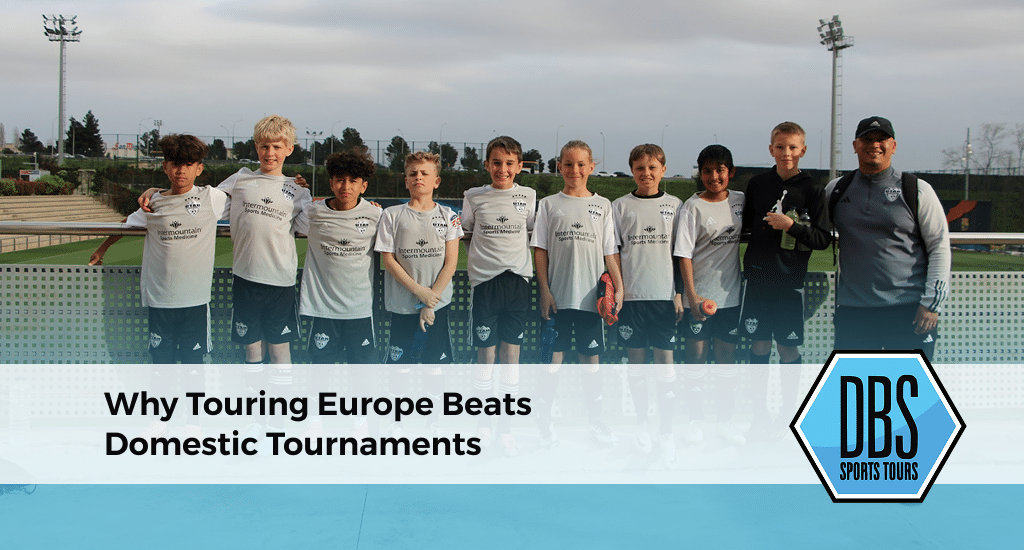
Domestic tournaments provide competition, repetition, and exposure within a familiar structure within the United States however this familiarity can limit perspective.
European Football tours offer something tournaments domestically cannot
- Exposure to different football cultures, styles, philosophies & methodologies.
- Learning through experience and immersion and not just repetition
- An insight to how players understand the game and have a passion for it not just an interest
- Cultural experience and knowledge
It’s not about picking or deciding one soccer experience over the other, it’s about recognising that Europe offers a different layer of development, one that’s difficult to replicate at home in the United States. Domestic tournaments are great, but touring Europe is a necessity!
How the Tours work: Utah Avalanche SC U12s in Barcelona
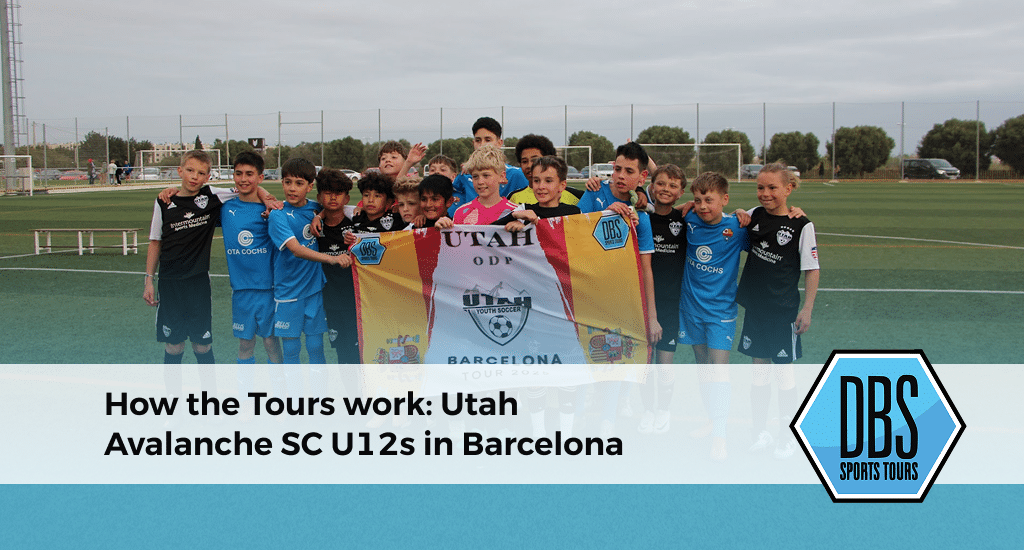
In February, Utah Avalanche SC U12s are set to travel to Barcelona, Spain, as part of a structured European soccer tour designed to expose young players to a different football environment at a formative age.
For Head Coach Derek Dunn, the trip marks another step in his ongoing commitment to player development through international experiences.
“This will be the third soccer tour experience I’ve brought a team on with DB Sports Tours, and my first time travelling with a boys’ team. These trips are invaluable for young players in the United States who want to challenge themselves and learn from Europe’s elite.”
The tour has been designed to balance high-level football experiences with cultural exposure and professional standards. Thus, creating an environment that supports both learning and enjoyment.
What the Tour Will Include
The team will spend six nights at Cambrils Park, a 4-star Superior Resort, one of the accommodation offerings within the Mediterranean Sports Hub, a setting regularly used by elite youth and professional teams. This will be the third time Coach Dunne has chosen this location. Spanish Soccer Tours and especially in Barcelona allow players to train, bond and live together in the secure environment of Cambrils Park. They will eat, sleep, train, play and travel together daily during their time in Barcelona.
With transport included as a group and everyone travelling together the bond that will be created on bus journeys will be something remembered for years to come because of the games, sing song and stories that will be told on each journey.
During the Barcelona Soccer Tour experience on top of the above there will be a lot of soccer activities,
- The team will train with professional soccer club RCD Espanyol Academy coaches at the club’s Dani Jarque Training Ground, offering players insight into a professional academy environment.
- Three additional training sessions with Catalan Pro Licence coaches. This part of the program is focused on technical development, positional understanding, and game awareness.
- Two competitive matches against local Spanish opposition, giving players the chance to test themselves against teams raised in a different football culture.
Off the pitch and outside of the football activities, the itinerary also includes a visit to the UNESCO city of Tarragona unique as the team is from Utah, Salt Lake City and Tarragona have the church of Jesus Christ of Latter-day Saints, allowing families to visit and attend mass during their tour in Barcelona.
The group will have the opportunity to attend a live La Liga Match, where they will watch FC Barcelona vs Levante.
Why These Experiences Stay With Players
Ask players years later about their development, and many won’t talk about a specific goal or trophy.
They’ll talk about moments:
- Training at a professional academy
- Facing a technically gifted opponent
- Watching a La Liga match live
- Navigating a new country with their teammates
These moments shape how players see themselves within the game.
They raise standards. They reset expectations. And they quietly influence how players train, compete, and think when they later return home.
The Role of DB Sports Tours
What separates a meaningful European tour from a football holiday is structure and focus.
DB Sports Tours focuses on creating tours that are:
- Purpose-driven
- Age-appropriate
- Development-focused
Every element, from training partners to accommodation, is selected to support football growth, not just itinerary appeal. The goal here isn’t to overwhelm players. It’s to expose them to the right level of challenge at the right time.
European soccer trips aren’t about chasing prestige or just exploring Europe. They’re about perspective.
They show young players what football looks like when it’s treated as a craft. They give coaches new reference points. And they help teams understand that development isn’t always linear; sometimes it’s experiential.
Domestic tournaments will always have value. But Europe offers something unique and impactful. It offers context. And for players who want to understand the game they play truly, that context can be transformative.